
Noomiclone
Ready to Try noomiclone?
The build loads straight into a single bar scene. Left arrow arches the body, space tucks, up arrow lets go, R restarts the attempt.

Ready to swing
noomiclone
Press Play noomiclone to load the browser game iframe.
Controls: left arrow arch, space tuck, up arrow let go, R reset. The same four buttons are drawn on screen for touch input.
Noomiclone Online: One Bar, Four Keys, One Window
Noomiclone is a gymnastics bar game where the entire input is four keys. You hang from a post, swing, throw your body into a shape, let go, and either reach the next bar frame or drop to the orange floor. The browser build runs on Unity WebGL inside the page, so nothing installs and no account is needed. It belongs on this site for the same reason the wacky walking games do: the whole game is one press landing inside a window of a few frames.
Two things about this build are worth fixing in your head before the first attempt. It is version 0.9, and the developer's itch page still marks it In development. And it has one scene. No map picker, no modes, no lobby. From the moment it loads you are on the same bar, and every attempt after that is the same bar again.
That second point explains most of the confusion around the game. The store listings for the phone app describe 12 bar maps and 6 tumbling maps, and people repeat that number when they talk about the browser version. It does not apply here. What loads in your tab is a single fixed scene, and the map count belongs to a different build of the same game.
Noomiclone Controls: Arch, Tuck, Let Go, Reset
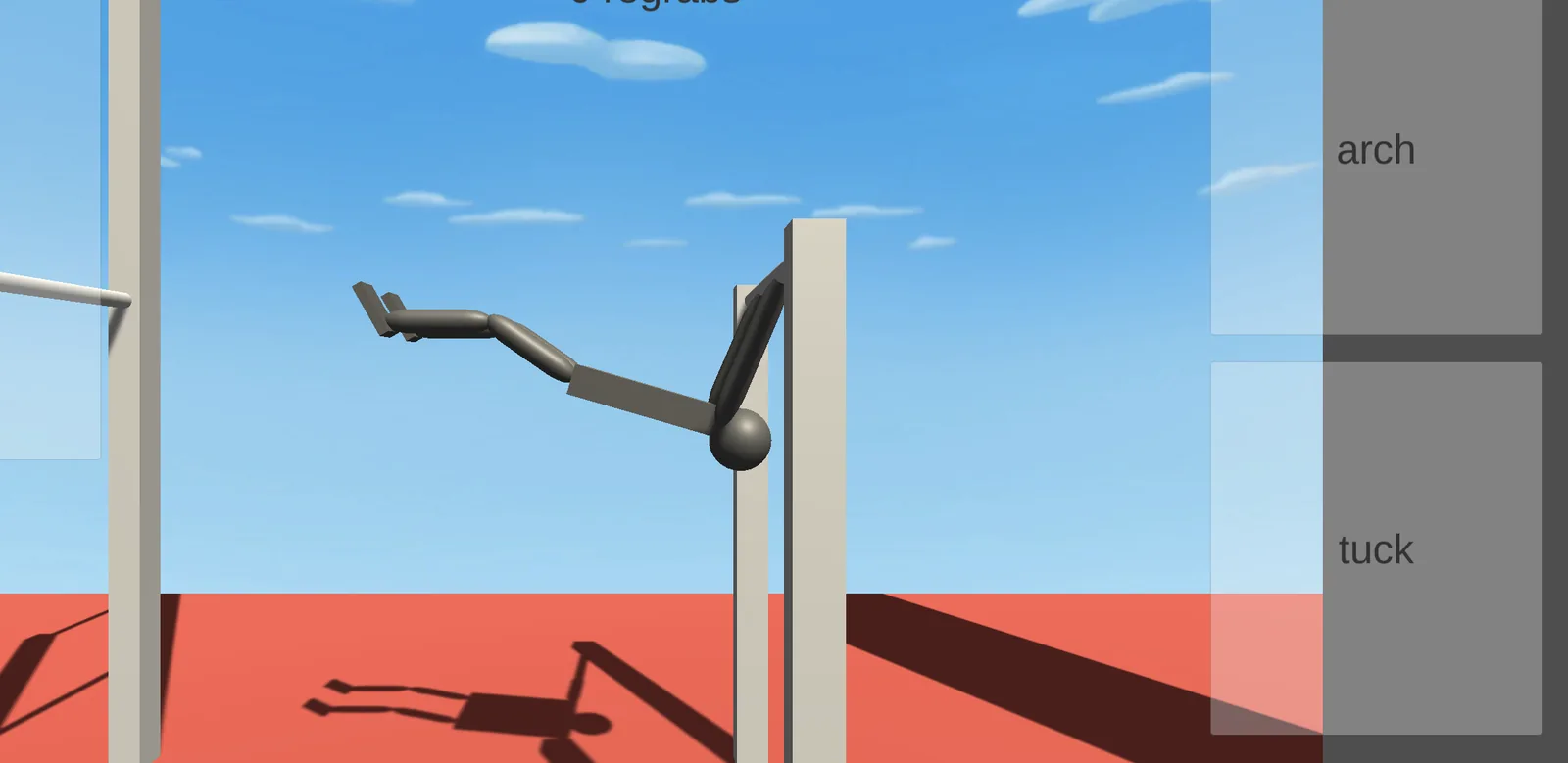
- 1Opens the body out, chest and hips pulling away from the bar. In the frame captured for this page the figure ends up horizontal, torso level with the horizon and legs still folded behind. You cannot land from that shape, so my reading is that arch is a loading move: it changes what the swing is carrying. That reading comes from the posture on screen, not from anything the game spells out. (Left arrow)
- 2Knees to chest, body shortened. A shorter body turns faster on the same energy, which is the usual reason a tuck beats an arch when you need another half rotation. The build shows no readout of spin, so the figure after the press is the only feedback you get. (Space)
- 3Releases the grip. Everything after this key is trajectory: at the moment of release the body is a falling object carrying whatever the swing gave it. Early and late look almost identical on screen and produce completely different flights, which makes this the most expensive key in the set. (Up arrow)
- 4Puts the attempt back at the start with no confirmation, no animation and no penalty. Reset is why the loop stays tight enough to bear repeating. (R)
Four Ways a Noomiclone Attempt Falls Apart
Long body when you needed short
Arch is the easy press. The figure stretches out, the swing looks bigger, and it feels like progress. Tuck is the one that buys rotation. A run of arches with no tuck is where I would expect a first session to go wrong.
Letting go at the top of the arc
The top of the swing feels like the moment to release, and for reaching a bar that sits below you it is the wrong moment: forward momentum is nearly spent and the flight becomes a drop. Nothing in the build tells you this. The height of the next bar does.
Pressing reset on the first wobble
R is free, instant and always available, which makes bailing cheap. Cheap bailing still has a price: the attempt you abandon is the one where the catch would have happened.
Watching the body instead of the bar
The figure is where the animation is. The decision lives on the bar, at the height where the grab has to happen, so your eyes belong there and the shape gets handled by feel.
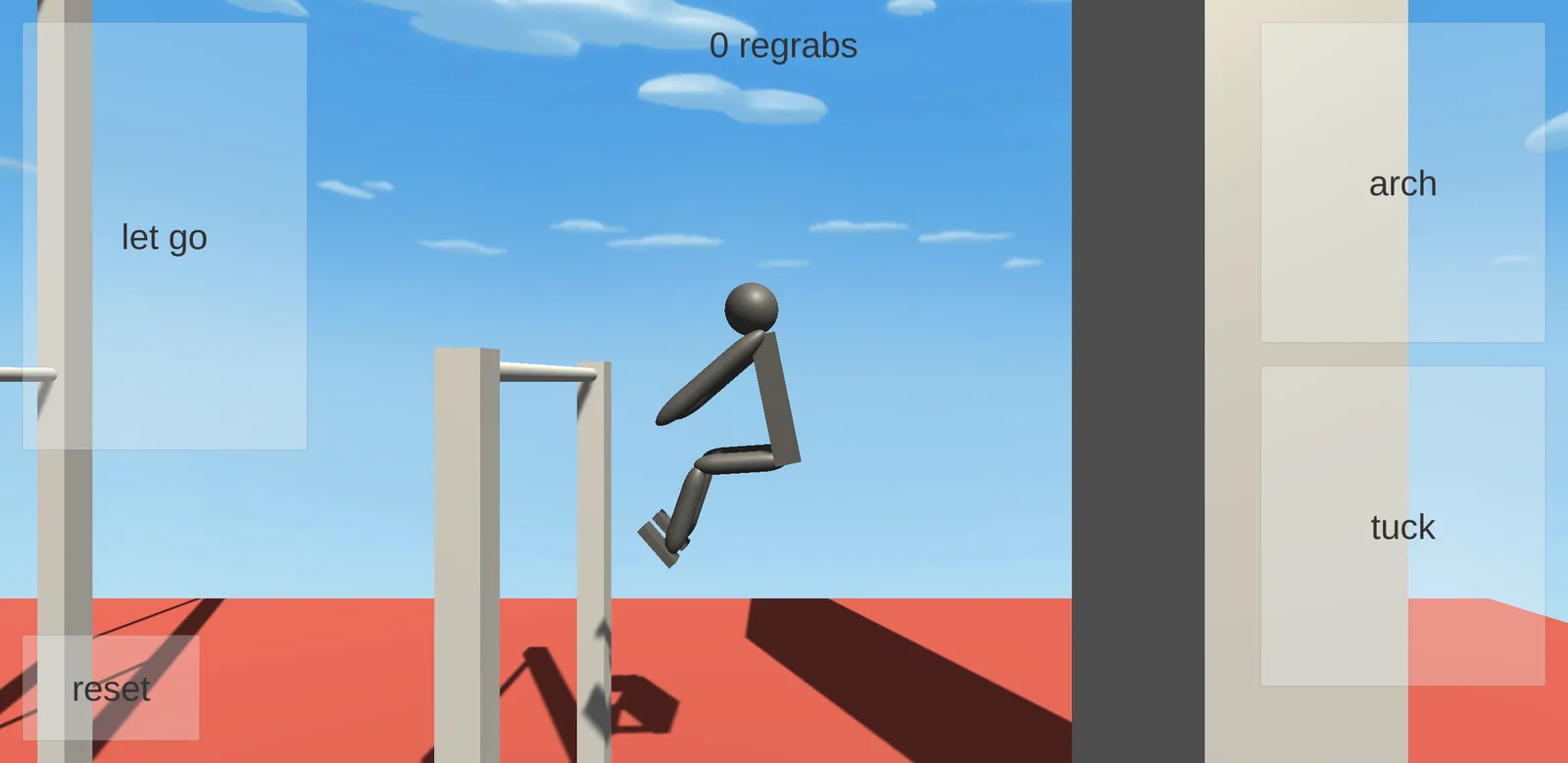
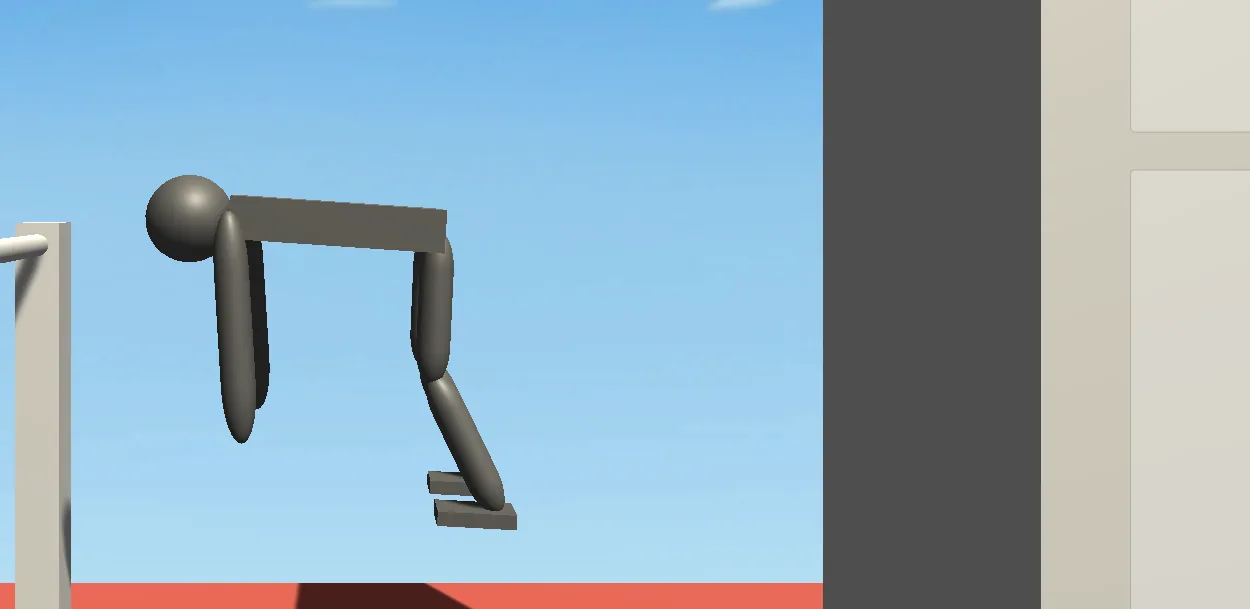
Noomiclone Screenshots: Three Frames From One Swing
The Regrab Counter Is a Habit Meter, Not a Score
The top of the screen carries a running count: 0 regrabs, then 1, then more. A regrab is a second grab at the bar after you have already let go. On the phone app the same counter feeds skin unlocks. The browser build never shows a score screen that explains what it does with the number here.
Read it as a record of bailing rather than a score to chase. Zero regrabs on a completed attempt means one clean grab. One regrab means you caught the bar, lost it and had to catch it again, which is a different skill from a clean catch and should not be filed under progress.
It also does something a timing game needs. It turns a feeling into a number. You cannot see your release timing in this build, but you can see how often it was wrong.
Noomiclone Web vs the Phone App: 18 Maps Against One Scene
The Google Play listing advertises 12 bar maps and 6 tumbling maps, slow motion, replay export, draggable buttons and a high frame rate option, on version 2.3.2 from October 2026. The browser build says 0.9 and In development. Those are not two descriptions of one product. They are two products at very different stages, and the map count only holds for the one on your phone.
The build backs that up on its own. It ships a single scene file, and a player comment on the itch page calls the web version a proof of concept where the maps cannot be changed. Different kinds of evidence, same conclusion.
For a game built on repeated attempts, one scene is a defensible trade. A map list would put a load pause between attempts, and attempts are the entire product. What you give up is variety. Ten minutes in, the bar and the sky behind it stop being new, and the only thing left that can change is your timing.
Noomiclone Tips: Practise One Key at a Time
Physics games usually ask you to slow down. There is no slow motion in this build, so the equivalent is to narrow what you watch.
Ten minutes is a sensible session at this stage. The scene does not change, so the thing that improves is your sense of the window, and a sense of a window holds better than a memorised route does.
- Fix one key per attempt. Spend ten attempts pressing only arch and tuck at different points in the swing and watch what the figure does. Judging four keys at once when you have no reference for any of them turns a session into noise.
- Count regrabs, not distance. The counter is on screen and a distance score is not, which is a hint about what the build wants you to track.
- Stop before reset becomes reflex. If every wobble ends in R, you stop collecting the information the wobble was giving you.
Noomiclone FAQ
Games Like Noomiclone for Another Timing Loop
If the appeal is a short attempt decided by one press, these run the same shape at different speeds.


